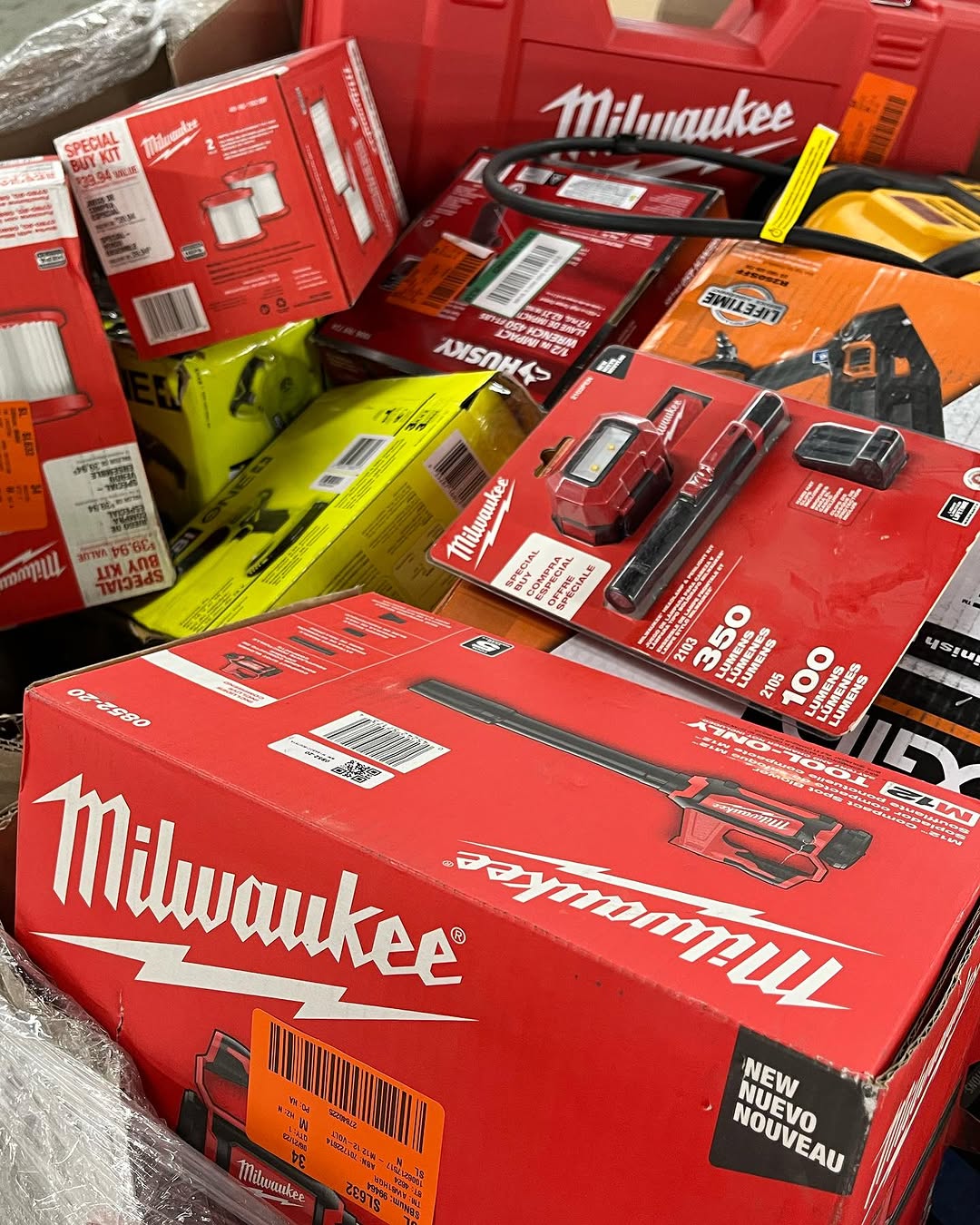
Tool pallets are among the most consistent and profitable categories in the liquidation industry. With brands like Milwaukee and DeWalt leading the market, resellers have excellent opportunities for strong returns. This guide compares the two top power tool brands to help you decide which tool pallets offer the best resale value for your business.
🔧 Popular Tool Pallets


Understanding Tool Pallet Types
| Pallet Type | Average Price | Typical ROI | Best For |
|---|---|---|---|
| Milwaukee Tool Pallets | $1,300 - $2,500 | 60-80% | Experienced resellers, contractors |
| DeWalt Tool Pallets | $600 - $1,500 | 50-70% | All reseller levels |
| Ryobi Tool Pallets | $1,200 - $2,000 | 40-60% | Budget-conscious buyers |
| Mixed Tool Pallets | $950 - $1,500 | 40-60% | Beginners and variety seekers |
| Generator Pallets | $9,000 - $15,000 | 40-60% | High-ticket resellers |
Milwaukee Tool Pallets: The Premium Choice
Milwaukee tool pallets are known for their high-quality, professional-grade power tools. Milwaukee has a loyal following among contractors and serious DIYers. A typical Milwaukee pallet contains 50+ tools including drills, saws, impact drivers, batteries, and accessories.
Pros of Milwaukee Pallets
- Highest resale value: Milwaukee tools hold their value exceptionally well
- Premium pricing: Items sell for 60-70% of retail
- Loyal customer base: Professionals seek Milwaukee specifically
- M18 and M12 Fuel lines: Most popular cordless system on the market
Cons of Milwaukee Pallets
- Higher upfront cost ($1,300+ per pallet)
- Requires knowledge of tool models and battery compatibility
- More competition from other resellers
DeWalt Tool Pallets: The Consistent Performer
DeWalt tool pallets offer excellent value with strong brand recognition. DeWalt is known for durability and reliability. A typical DeWalt pallet contains drills, impact drivers, saws, batteries, and accessories.
Pros of DeWalt Pallets
- Lower entry price: Pallets starting at $600
- Fast turnover: Items sell within 1-2 weeks
- Broad appeal: Popular with both professionals and homeowners
- Excellent battery ecosystem: 20V MAX system is widely used
Cons of DeWalt Pallets
- Lower margins than Milwaukee (50-70% vs 60-80%)
- More competition from big-box store sales
- Some lower-end models have lower resale value
Pro Tip: Focus on Battery Platforms
Buyers often stick with one battery platform. Milwaukee's M18 and DeWalt's 20V MAX are the most popular. Pallets with batteries and chargers sell faster and for higher prices than bare tools alone. Look for pallets with a high percentage of brushless tools (Fuel for Milwaukee, XR for DeWalt).
Head-to-Head Comparison
| Metric | Milwaukee | DeWalt |
|---|---|---|
| Average Pallet Cost | $1,300 - $2,500 | $600 - $1,500 |
| Items per Pallet | 50+ tools | 40-60 tools |
| Typical ROI | 60-80% | 50-70% |
| Average Item Price | $30 - $150 | $20 - $100 |
| Turnover Time | 1-3 weeks | 1-2 weeks |
| Target Audience | Professionals, contractors | Professionals, homeowners |
Which One Should You Choose?
Choose Milwaukee Pallets If:
- You have a larger budget ($1,300+)
- You want the highest profit margins
- You have experience with power tools
- You sell to contractors and professionals
Choose DeWalt Pallets If:
- You're a beginner or intermediate reseller
- You have a smaller budget ($600+)
- You want faster turnover
- You sell on multiple platforms (eBay, Facebook Marketplace)
Other Profitable Tool Brands
- Ryobi: Great value brand, fast turnover, beginner-friendly
- Generators: High-ticket items, excellent margins for experienced sellers
- Power Equipment: Pressure washers, blowers, seasonal demand
- Grills: Seasonal high-demand items for summer reselling
What to Look for in Tool Manifests
- Brushless vs brushed: Brushless tools (Fuel/XR) command premium prices
- Battery inclusion: Tools with batteries sell for 30-50% more
- Completeness: Original cases and accessories add value
- Condition: A-grade tools sell for 60-70% of retail, B-grade for 40-50%
Required Equipment for Tool Reselling
- Testing tools: Batteries, chargers, outlets for corded tools
- Cleaning supplies: Microfiber cloths, compressed air, disinfectant wipes
- Packaging: Boxes, bubble wrap, packing tape
- Knowledge: Understanding model numbers and battery compatibility